








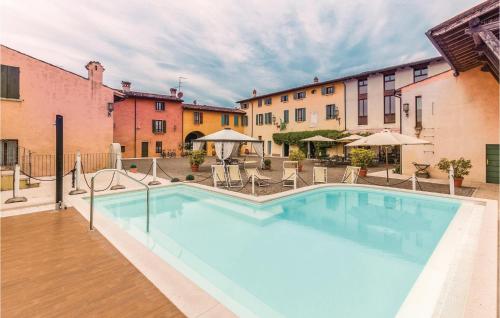





Discover Solferino
One of the top attractions in Solferino is the San Pietro in Vincoli church, which dates back to the 15th century. The church is known for its beautiful frescoes and stunning architecture, and it is a must-visit for art and history enthusiasts. Other notable landmarks in Solferino include the Castle of Solferino and the Palazzo Comunale.
When it comes to food, Solferino is a gastronomic delight. The town is known for its delicious traditional cuisine, including homemade pasta, risotto, and polenta. You can also enjoy locally produced wines, olive oil, and cheese. Be sure to visit one of the town's many restaurants and trattorias to sample these delicious dishes.
Discovering the Tragic Events of Solferino
The small locality of Solferino, located in the Lombardy region of Italy, may not be well-known to many people. However, it played a significant role in world history due to the tragic events that took place there.
In 1859, Solferino was the site of a major battle during the Second Italian War of Independence. The Austrian army, led by Emperor Franz Joseph I, faced off against the French army, led by Napoleon III. The battle lasted for over nine hours and resulted in a massive loss of life on both sides.
The aftermath of the battle was described in horrifying detail by Swiss businessman Henry Dunant, who happened to be traveling through the area at the time. Dunant witnessed the suffering of wounded soldiers left on the battlefield without medical assistance, leading him to take action. He organized local people to provide aid to the wounded soldiers, regardless of which side they were on.
This experience inspired Dunant to write a book, "A Memory of Solferino," in which he called for the establishment of a neutral organization that would provide medical care to wounded soldiers during times of war. This idea eventually led to the founding of the International Committee of the Red Cross, which has helped countless people in conflict zones around the world.
Today, Solferino is home to several memorials and museums that commemorate the tragic events of 1859. The Red Cross Museum, located in the nearby town of Castiglione delle Stiviere, offers a fascinating look at the history of the organization and its ongoing humanitarian work.
Visiting Solferino is a sobering reminder of the devastating impact of war, but also a testament to the resilience of the human spirit in the face of tragedy.
If you're planning a trip to Italy, consider taking a detour to Solferino to pay your respects to the soldiers who lost their lives on that fateful day and to learn more about the inspiring legacy of Henry Dunant.
Battle of Solferino: Countries Involved
Solferino is a small locality in the Lombardy region of northern Italy. This peaceful town was once the site of one of the bloodiest battles in European history, the Battle of Solferino, which took place on June 24, 1859. The battle was fought between the armies of Austria and France, with the Kingdom of Sardinia also playing a significant role.
The Kingdom of Sardinia had long been seeking to unify the various regions of Italy under its rule, but faced opposition from the powerful Austrian Empire. In 1859, Sardinia formed an alliance with France, with the aim of driving the Austrians out of Italy.
The two sides met on the fields around Solferino, with a total of around 300,000 soldiers on both sides. The fighting was brutal and lasted for over nine hours, with both sides suffering heavy casualties. By the end of the battle, more than 6,000 soldiers had been killed and around 40,000 had been wounded.
The Battle of Solferino was a turning point in Italian history. Although the Austrians were technically the victors, the sheer scale of the carnage convinced the French and the Sardinians that they needed to continue fighting for Italian unification. The following year, the Austrians were defeated again at the Battle of Magenta, and the way was finally cleared for the Kingdom of Italy to be established in 1861.
Today, Solferino is a peaceful town once again, with little evidence of the violence that took place there over 150 years ago. However, the Battle of Solferino remains an important event in Italian history, and a reminder of the sacrifices that were made in the struggle for Italian unification.
Battle of Solferino: Alias and Historical Significance
The Battle of Solferino, also known as the Battle of Solferino and San Martino, was fought on June 24, 1859, in the town of Solferino in northern Italy. The battle was part of the Second Italian War of Independence and was fought between the forces of the Kingdom of Sardinia, under the command of Victor Emmanuel II, and the Austrian Empire, under the command of Emperor Franz Joseph I.
The battle was one of the bloodiest of the 19th century, with an estimated 40,000 casualties. The battle began early in the morning, with the Sardinian forces attacking the Austrian positions. The fighting was intense and lasted throughout the day, with both sides suffering heavy losses.
The battle ended with the Sardinians emerging victorious, forcing the Austrians to retreat. The victory was a significant moment in the history of Italy, as it helped to pave the way for the unification of the country.
The Battle of Solferino is also significant for its impact on the career of Henry Dunant, a Swiss businessman who witnessed the battle and was horrified by the suffering of the wounded soldiers. Dunant went on to found the International Committee of the Red Cross, which has since become one of the world's leading humanitarian organizations.
Today, the town of Solferino is home to several monuments and memorials commemorating the battle, including the Tower of San Martino, which offers panoramic views of the surrounding countryside.
The Battle of Solferino remains an important moment in the history of Italy and is a reminder of the sacrifices made by those who fought for the country's independence.
Language of Solferino: Unraveling the Mystery
Solferino is a small town located in the Lombardy region of Italy. It is known for its rich history, beautiful architecture, and picturesque countryside. However, one of the most intriguing aspects of Solferino is its unique language.
The Language of Solferino is a dialect of Italian that is spoken exclusively in this small town. It is a fascinating blend of Italian, French, and German, with a few unique words and phrases thrown in for good measure.
One of the most interesting features of the Language of Solferino is its origins. While it is not entirely clear where the language came from, it is believed to have developed during the 19th century as a result of the town’s strategic location.
Many armies passed through Solferino during this time, including the French, Austrians, and Italians. As a result, the town became a melting pot of different cultures and languages, which eventually gave rise to the Language of Solferino.
Despite its unique origins and small size, the Language of Solferino is still spoken by many of the town’s residents today. It is often used in everyday conversation, and many locals take great pride in their ability to speak it fluently.
If you are planning a visit to Solferino, it is worth taking the time to learn a few phrases in the Language of Solferino. Not only will it make it easier to communicate with the locals, but it will also give you a deeper appreciation for the town’s rich cultural heritage.
In conclusion, Solferino is a small but historically significant locality in Italy that is definitely worth a visit. Its charming old town, rich cultural heritage, and picturesque surroundings make it an ideal destination for those seeking a quiet and authentic Italian experience. Whether you are interested in history, nature, or simply enjoying the pleasures of Italian life, Solferino has something for everyone. So, if you happen to be in the area, don't miss out on the chance to discover this hidden gem and immerse yourself in its timeless beauty.